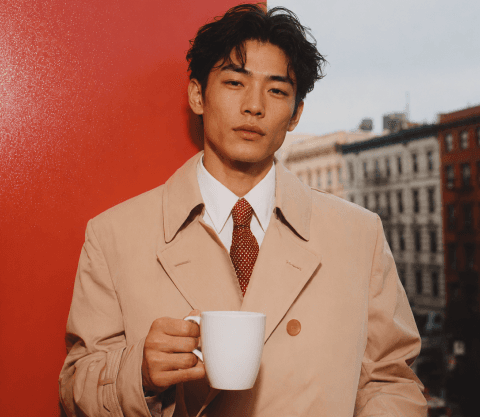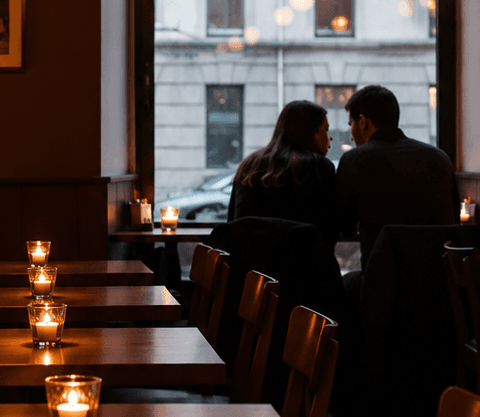
Some versions of the coffee date deserve their bad reputation.
Two people meet at a point equidistant between their apartments. They drink caffeine in a brightly lit room with nowhere to go afterward. He picked the location because it seemed fair. She picked it because it felt safe. Neither picked it because it was good. The hour ends on the street with a hug and vague references to doing it again. Nothing moved.
Not a date. A formality with a receipt.
Then there is the coffee date the man leads: he selects a place he knows, sets the time, pays when the tab arrives, and positions the hour in a part of the city where the interaction has room to continue if both people want it to. Same drink. Different result.
Cheap is avoiding cost because you fear the outcome. Calibrated is accepting appropriate cost because you understand the stage. The confident man is not afraid to spend. He is unwilling to spend before the interaction has earned it. A man who opens with a 3,000-baht dinner before he knows anything about the woman across from him is not being generous. He is spending to manage his own uncertainty. That is the expensive version of cheap. The coffee date, led correctly, is the opposite.
Key Takeaways
A date is connection plus sexual possibility — coffee qualifies when the man leads it and builds in logistical continuity
The first date is for screening and evaluation, not performance
Over-investing before connection exists creates implied obligation, not attraction
Meeting halfway solves a distance problem while eliminating forward momentum
First-date investment sets a floor that is difficult to lower later without signaling a change in interest
What a Date Actually Is
A date has a precise definition: connection plus sexual possibility.
Connection without sexual possibility is a job interview. Sexual possibility without connection is something else. A date is both, and the sexual possibility does not need to be realized — it needs to be structurally available. The venue, the timing, and the positioning determine whether that availability exists. A date is not just an activity. It is a context, and the man who asks for the meeting should be prepared to lead it.
Good positioning cannot manufacture genuine mutual desire. What it can do is avoid destroying it with bad logistics. If the desire is there, the path should be clear. If it isn't, the path is irrelevant.
When the man leads — venue chosen, time set, tab covered, the date positioned somewhere with room for a second location if the conversation earns it — coffee becomes a real date. The structure communicates intent. The investment, modest and appropriate to the stage, signals that he is taking the interaction seriously without betting the outcome on a restaurant's ambient lighting.
The Problem With Meeting Halfway
Halfway sounds fair. Tactically, it eliminates forward momentum while appearing to solve the logistics problem.
The geographic midpoint has no particular relationship to either person's life and no obvious continuation if both people want one. Her preference for this format is not irrational. It protects her time, limits her logistical exposure, and keeps her options open. It optimizes for her comfort rather than for signal, momentum, or his need to evaluate whether the interaction has anywhere to go.
A man who accepts that frame wholesale has allowed the date's structure to be set on terms that favor one side of the equation. He gets the company. He does not necessarily get the information he needs, or the context in which anything real can develop.
The coffee date works when the man structures it with intent. Without that structure, it becomes a different interaction wearing the same name.
Why Expensive First Dates Backfire
A first date at a solid Bangkok restaurant costs 2,000 to 3,500 baht once you include drinks and transport. The number is not the problem. What that level of spend communicates before anything has been established is.
Expensive first dates create three specific liabilities. The first also sets a precedent that Part 3 of this series covers in full.
Implied obligation. No connection has been established that justifies a 3,000-baht evening yet. The interaction now carries an expectation neither person has earned yet, and that pressure registers even when the food is good. Obligation is not attraction.
Premature attachment. He has spent real money. He wants the evening to have been worth it. That want colors how he reads her signals and how generously he scores the interaction. His judgment is compromised before the first course arrives.
Venue-generated warmth. A good Bangkok restaurant produces a pleasant evening with almost anyone. A man who depends on the setting to generate emotional texture is not learning whether she is drawn to him. He is learning whether she enjoys a nice dinner. The sample size on that finding is very large.
Coffee removes the confounding variables. What remains is whether two people can hold each other's attention for an hour without outside assistance. That is the variable that matters.
What Coffee Screens For That Dinner Cannot
Strip away the production value and what remains is signal.
If the conversation is genuinely engaging, the venue is irrelevant. If it is not, dinner delayed the conclusion by two hours and 2,500 baht. The coffee date is not a lesser version of dinner. It is a more efficient instrument for the job.
Three things a man-led coffee date reveals that dinner obscures:
How she responds to a man who leads the format. A woman who accepts the format, shows up on time, and engages fully is telling you something about her expectations and her interest level. A woman who lobbies for an upgrade before you have met is also telling you something. Both are useful data. The coffee format produces legible signal where the dinner format produces noise.
Whether she is there for the interaction or the occasion. Coffee provides no ambient entertainment. If she is engaged, she is engaged with you specifically. That is harder to fake across 90 minutes than across a three-course dinner with a good soundtrack.
Whether the two of you can actually talk. This is the variable that determines everything downstream. You find out in 60 minutes instead of three hours, with no sunk-cost pressure to interpret the evening generously.
Running a Coffee Date That Works
Choose a coffee shop you have been to before. Somewhere in a part of the city you know, with real seating, a conversational noise level, and enough proximity to other venues that a second location is a reasonable option if the hour earns one. Somewhere you are already comfortable.
Arrive first. Order before she gets there. When she walks in, you are settled — not standing near the door, not at the counter deciding. The signal is small and reads clearly.
Pay when the tab comes. Do not make it a conversation.
Lead the conversation so she reveals herself. Not through prepared questions but through genuine curiosity and prompts that invite her to go further than she planned to. Evaluate what you find: Does she ask questions in return? Is she punctual and present? Does the conversation have reciprocity, or does it require constant fuel from your side? How does she speak about the people in her life? Is she easy to be with?
You are not there to perform for approval. You are there to evaluate while being evaluated. The man who talks too much about himself on a first date believes he is building attraction. He is reducing it.
Keep it to 60 to 90 minutes. End it while both people are still engaged. A clean close — coffees finished, you have somewhere to be — creates a better impression than an evening extended past its useful life and sets up the next meeting without requiring a negotiation.
Close simply: "Let's do this again." A statement, not a question.
The same logic applies at scale. LoveLTR's Bangkok dating events create structured, real-world environments where signal appears early: who shows up, who engages, who can hold a conversation without hiding behind an app. If you want more efficient ways to meet Bangkok singles in person, browse what's on.
Frequently Asked Questions
Is a coffee date too low-effort for a first date?
Low-effort and calibrated are not the same thing. A man-led coffee date — venue chosen deliberately, tab covered, conversation given full attention — is a complete first date. What makes a first meeting feel low-effort is the absence of leadership and intention, not the absence of a wine list.
What if she says she would prefer dinner?
Treat it as information and make a deliberate decision. A woman who signals high venue requirements before the first meeting is showing you how she calibrates effort to stage. If you agree to dinner, do it because you chose to. Part 3 of this series covers why first-date investment sets a floor that is difficult to lower later without signaling a shift in interest.
How long should a coffee date last?
60 to 90 minutes. Long enough for the conversation to develop past the surface. Short enough to end before it needs artificial extension. A clean close, while both people are still engaged, leaves a stronger impression and sets up the next meeting naturally.
Where should I take her for coffee in Bangkok?
Somewhere you already know, in a neighborhood with logistical continuity if the date goes well. Good seating, conversational noise level, easy to find. Part 5 of this series covers what to look for in a first-date venue, with notes on atmosphere, seating, and positioning.
Conclusion
The coffee date is not a budget decision. It's a structural one.
A man who leads the format — venue chosen, time set, tab covered, positioned somewhere with room for the interaction to continue — is running a genuinely strong first meeting. He screens efficiently, invests at the level the stage warrants, and keeps his options open.
The man who opens with a 3,000-baht dinner before he knows anything is buying certainty he hasn't earned. The setting will produce a pleasant evening. It will not tell him whether she is actually interested in him, whether she is worth a second meeting, or whether the connection is real or performed.
Match investment to stage. Lead the format. Give the hour your full attention. Then decide whether the interaction has earned the next one.
Browse LoveLTR's Bangkok dating events to see where Bangkok singles are meeting offline in 2026.