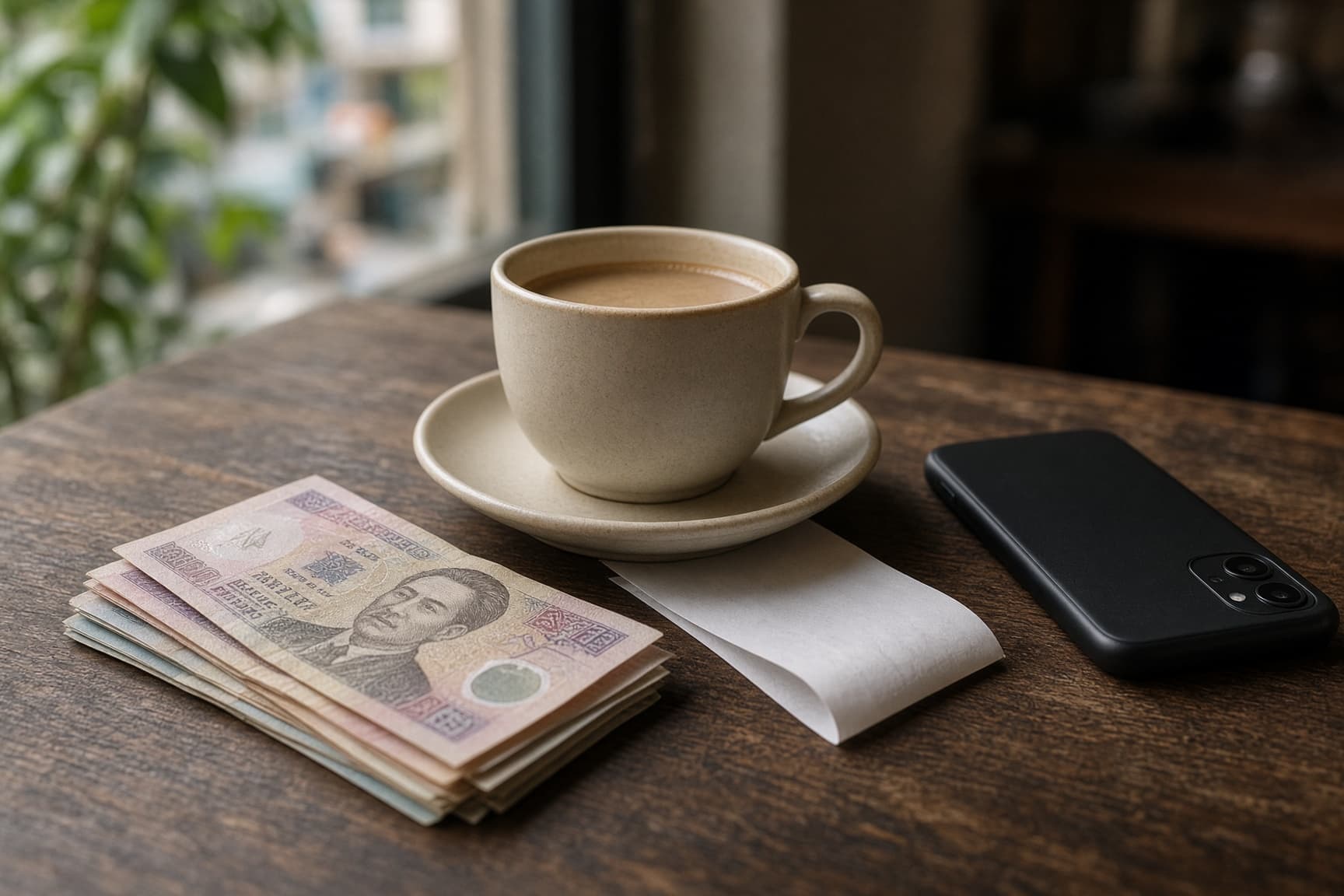
Being stood up costs you the evening, the trip across town, and the twenty minutes you spent deciding what to wear. It costs the other person nothing. Tinder, Bumble and Hinge have no no-show policy at all, because nothing was paid per meeting: there is nothing to refund and no transaction to reverse.
That changes once money sits on the table. Coffee Date, a matchmaking service run by Clique Connection in Ho Chi Minh City, charges per date. That forced a decision about what happens when someone cancels. The rules they wrote name who absorbs the loss, and they show which party Clique built the policy to protect. Figures below come from the service's own app code and policy pages, fetched in August 2026.
What a no-show costs on Tinder, Bumble and Hinge
On Tinder, Bumble or Hinge, a no-show is free for the person who does it. Nothing was paid per meeting, so nothing can be withheld. Free tier or paid subscription, the billing runs the same either way. The platform has no financial stake in whether the date happens.
That design has a consequence people feel without naming. Costless flaking is common flaking, and the person left waiting absorbs the loss. Blocking or unmatching is the only recourse, and it arrives after the fact.
Paid per-meeting services face a different problem. Once a ticket has been bought, a cancellation destroys something with a price, and somebody has to eat that cost. Whoever the company picks to absorb it is the most honest signal you get.
The four rules, as written
Coffee Date's cancellation logic runs on four cases, all four visible in the app's own interface strings rather than a marketing summary. Verified from primary source.
Cancel 24 hours or more ahead. Both people get their tickets back. The interface labels this outcome as applying to "both (early cancellation ≥24h)".
Cancel inside 24 hours. The other person is refunded and the canceller is not. The status line reads: "Cancelled · date ticket refunded to [name], you are not refunded (under 24h)."
Reschedule instead of cancelling. The date proceeds on a new slot with no further charge: "The date still goes ahead, no additional date ticket deducted."
Run late. The app notifies the other person automatically, in the app and by email, with the delay estimated in minutes: "Notified [name]: you are running ~[N] minutes late."
The same principle runs underneath all four.
Where the money goes is the whole design
Look at where the money goes in case two. The canceller's ticket burns, and the person who was stood up gets theirs back. The platform keeps nothing. It does not hold the forfeited ticket as a rebooking fee, and it does not refund both sides as a goodwill gesture.
That is a deliberate choice, and it is the opposite of how most cancellation penalties work. A hotel charges you for a late cancellation and keeps the money. An airline charges a change fee and keeps that too. In both cases the business collects. Coffee Date hands the money to the counterparty instead.
A penalty works here where an appeal to courtesy would not, and the reason is structural. Obligation between strangers does not run on gratitude; it runs on consequence. Debt operates through fear of future cost rather than appreciation of a past favour, which is why "please be considerate" changes nothing and a forfeited ticket changes behaviour. The penalty converts a request into a price.
The stated reason sits in the app, attached to the late-notification feature: so the other person does not "prepare and then go to the café and wait for nothing." The policy treats wasted preparation as the loss, and prices it accordingly.
This is a different theory of trust from the credential model, which Japan's Status Party runs by requiring men to produce a withholding-tax statement or employee ID. That approach asks you to prove income or employer and imports trust from an institution. This asks nothing about who you are and instead makes bad behaviour expensive. The two approaches are compared elsewhere. The point here is narrower: a penalty structure screens after the fact rather than before it.
Rescheduling is not cancelling
The reschedule rule is the part most people would skip, and it carries more weight than it appears to. Moving a date to another time costs nothing extra. That draws a line between two things that look alike on a calendar and are not alike.
Someone who reschedules is still coming. Someone who cancels inside 24 hours has withdrawn. Charging both identically pushes the first group toward the second. If changing the time costs a ticket, cancelling outright is cheaper, so people cancel.
Write a policy that fails to separate these two cases and you manufacture the behaviour you were trying to prevent. Penalise a change of plan and you convert honest reschedulers into no-shows.
The late notifier, and what it admits
The lateness feature sends the other person a notice with an estimated delay, through the app and by email, at the moment you flag it. The email matters more than it looks. An in-app notice reaches someone already watching their phone, and a person travelling to a café often is not.
The people who built it worked from an accurate premise: most of the damage from lateness lands before the meeting. The cost sits in the preparation and the journey rather than the waiting. The notice is timed to reach someone while they can still change course.
Whether the notice arrives in time is not something an outside reader can verify, and it was not tested. Clique documented the intent, and nobody outside the company has tested the execution.
How to read any cancellation policy
Four questions pull the same information out of any no show policy, whether it belongs to a matchmaking service or a dating app, and all four can be answered before you pay.
Who gets refunded when someone cancels? If the answer is the platform, the policy protects revenue. If it is the counterparty, it protects the meeting. If nobody is refunded, the policy exists to reduce support tickets.
Is there a cutoff, and how long is it? A cutoff distinguishes a genuine change of circumstances from a withdrawal. No cutoff means every cancellation is treated identically, which is easier to administer and worse for the person who gave notice.
Is rescheduling priced separately from cancelling? If they cost the same, the policy is nudging people toward cancelling.
Where does the refund language live? A promise in a product FAQ is not a clause in the terms of service, and the terms usually win. Coffee Date is a live example of that gap: the product FAQ describes credits while the general terms waive refunds. That mismatch sits in their documentation unresolved. An unwritten expectation is a deal only you agreed to. You turn up on time and behave well, assuming the other side owes you something back if they do not. They never agreed to that, and no document says they did.
What this mechanism cannot do
A cancellation penalty solves for showing up. It does not reach what happens once both people sit down, and it makes neither of them a better match for the other.
It also does not screen anybody. Coffee Date verifies no income and no employer, and the profile review covers photos and questionnaires. Someone willing to lose the ticket price can flake as often as they can afford. A penalty this size deters casual flaking, not determined flaking.
There is one further limit worth stating plainly. Nothing here says the service is good, and this article is not a review. Both operators examined in this series have real corporate footprints and no credible scam pattern surfaced for either. A well-designed cancellation policy is evidence of thought about one specific failure, and no more than that.
Frequently Asked Questions
What is Coffee Date's no show policy?
Cancel 24 hours or more ahead and both people get their tickets back. Cancel inside 24 hours and the other person is refunded while your ticket burns. Rescheduling costs nothing extra, and running late triggers an automatic notice to the other person. Tinder, Bumble and Hinge have no equivalent policy, because nothing was paid per meeting in the first place.
Do dating apps refund you if someone stands you up?
Tinder, Bumble and Hinge do not, because paying there gets you more swipes rather than a specific meeting, and the free version involves no payment to return. Per-date services can, and the useful question is who receives that refund. A policy refunding the person who was stood up is compensating the injured party rather than the business.
What happens if I cancel a date less than 24 hours ahead?
On Coffee Date the other person's ticket is refunded and yours is not. With 24 hours or more of notice, both tickets are returned. Other services set different cutoffs or none at all, so check the specific number before booking rather than assuming a standard exists.
Is a cancellation fee a red flag?
Not by itself. The direction of the money is what matters. A fee retained by the platform protects the platform; a forfeited ticket transferred to the counterparty protects the meeting. Read the direction of the payment, not the presence of a penalty.
Does a strong no-show policy mean the service is legitimate?
No. It shows the company thought carefully about one failure mode. Legitimacy is a separate question answered by corporate registration, terms that match the sales page, and transparent pricing. Treat a good cancellation policy as one input among several.
Conclusion
A no show policy looks like administrative fine print and functions as a statement of priorities. Someone absorbs the cost of a late cancellation, and the company decides who. Coffee Date routes that cost to the canceller and returns the ticket to the person left waiting, inverting how most penalties work.
Before paying a service that charges per meeting, find the cancellation clause and answer four questions: who gets refunded, what the cutoff is, whether rescheduling is priced separately, and whether the promise sits in the terms or only the FAQ. The answers show you what the company will lose money for.
If you would rather meet people in a room where showing up is already the default, LoveLTR's Bangkok dating events publish format, crowd composition and structure before you book.