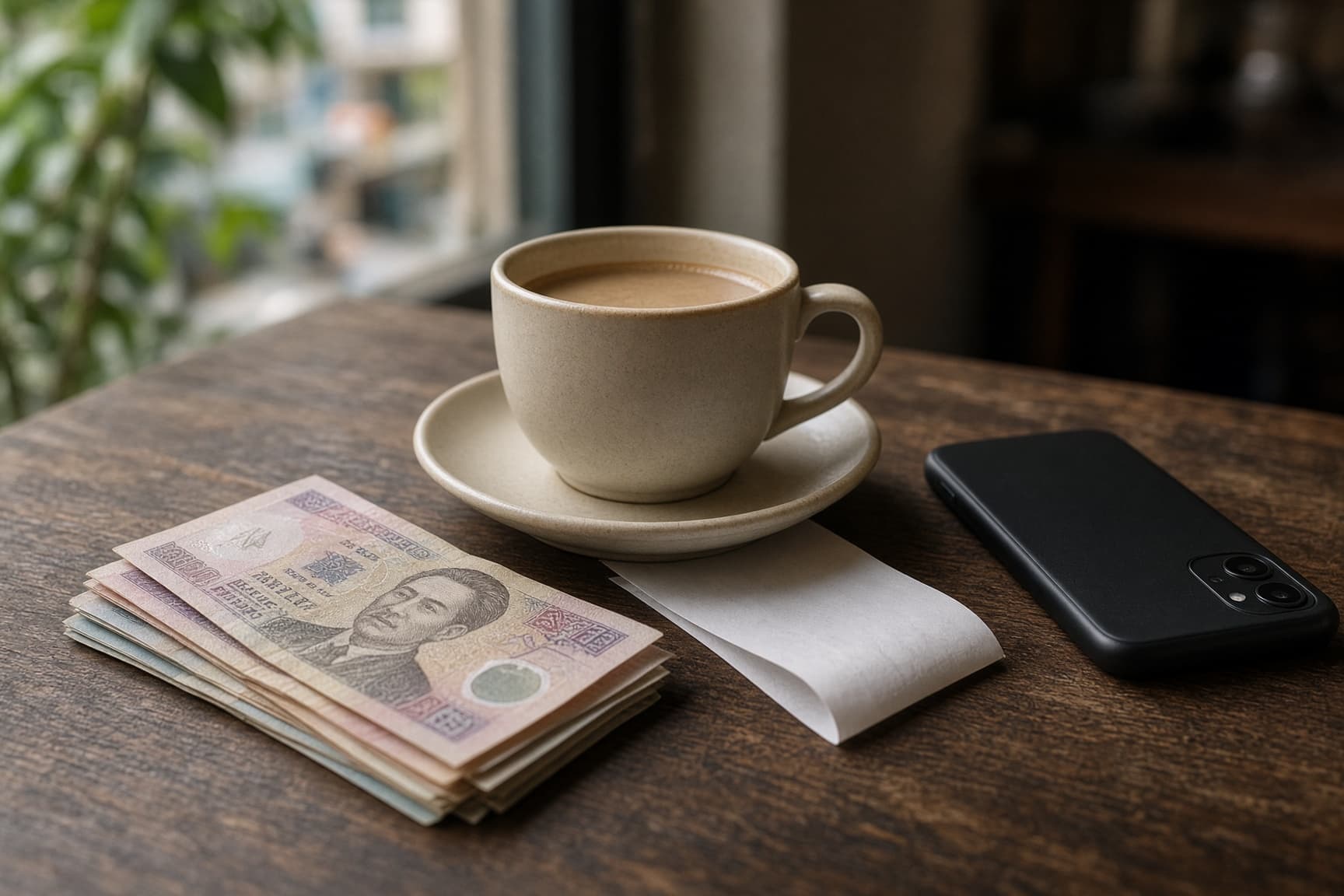
A paid tier on Tinder or Bumble is sold as a block of time: one month, three, six, or a year, with the longer blocks priced cheaper per month. You pay for the block up front, and it renews on its own when the block runs out unless you cancel. So the charge lands on schedule whether you went on four dates that month, one, or none. Nothing in that arrangement depends on you meeting anybody, and the app itself works without paying at all.
That is worth examining rather than complaining about. A second pricing model exists, and two matchmaking operators in Ho Chi Minh City both use it. Neither charges for browsing. Both wait until two people have independently agreed to meet, and only then does money move. The gap between those two designs tells you where each company's incentive points, and it changes what you should expect to get. Figures below come from the operators' own pages and app code, fetched in August 2026.
What an online dating app costs
Start with what most people pay, which is nothing. Tinder, Bumble and Hinge all run usable free tiers. You can build a profile, browse, match and message without paying, subject to a daily cap on likes. For plenty of people that free tier is the whole product, and the cap is a mild inconvenience rather than a wall.
Tinder, Bumble and Hinge sell a paid tier on top of that. What it gets you is speed and volume. More likes per day instead of the free cap. Your profile shown to more people. The ability to see who liked you before you swipe, and a button to undo a mistake. It does not buy dates, and the pricing does not pretend to. You are paying to move through the same pool of people faster.
You feel the consequence when the term renews and the charge lands regardless of what happened during it. A user who met nobody and a user who met six people are worth the same amount. No part of the company's income depends on the meeting happening.
The free tier changes the arithmetic more than the subscription does. If you are hitting the daily like cap and turning matches into dates, paying to lift that cap is a sensible upgrade to something already working. If you are not converting, a subscription buys more of an activity that produces nothing. The free tier was already telling you that at no cost.
One question sorts these two faster than any price comparison: when the money leaves your account, do you get something back for it? A paid tier charges for the whole block of time you bought, one month or twelve, whether or not you met anyone, so you can pay for a year and receive nothing. A per-meeting fee only fires when a meeting is arranged, so every charge has something attached to it.
Think of it as renting a gym membership rather than hiring a personal trainer. The gym charges you for the month whether you turn up or not, and it owes you equipment and a door that opens, nothing more. A trainer gets paid per session and has to show up with you. Tinder and Bumble sell the gym membership: access to the room, for a fixed period, with your results left entirely to you. The trouble starts when you pay for the gym and expect the trainer. No part of the app's income depends on you meeting anyone, so nothing in the business pushes it to make that happen.
The alternative: an entry fee, then nothing until both say yes
Matchmaking services like Coffee Date and Premium (Vietnam) work the other way round, with one thing to be clear about first: you do pay to get in. Premium (Vietnam) charges 800,000₫ to register once the free window closes on 30 September 2026, and Coffee Date charges a membership fee it does not publish until staff have approved your profile. That money leaves your account before you have seen a single candidate, and it is not contingent on anything.
What changes is everything after that. Browsing costs nothing, being shown a candidate costs nothing, and turning one down costs nothing. The next charge only triggers when both people independently say they want to meet, so the per-meeting money is tied to a meeting rather than to a calendar. Two layers, and only the second one waits.
This changes what the company is selling. Tinder and Bumble sell you the chance to look, free at the base tier; mutual-intent pricing sells you an arranged meeting and collects when one is arranged. Refusing every candidate costs nothing beyond whatever entry fee applies.
Deferring the second charge changes what over-investment costs you. Buy a large package up front and you have set a floor you cannot move backwards from, before learning anything about whether the introductions are any good. Paying per meeting keeps the rest of the spend calibrated to what the service has delivered so far. The entry fee is the part you cannot calibrate, which is why the undisclosed one is worth asking about before you apply.
The design also puts a floor under the quality of introductions in one narrow sense. A service that only gets paid when both parties agree has a reason to introduce people who might plausibly agree. Tinder and Bumble operate without that pressure.
Two operators, the same structural choice
Two Ho Chi Minh City services arrived at the same answer by different routes. Both are one-to-one matchmaking rather than group events, so neither is directly comparable to a speed dating format.
Premium (Vietnam) charges no recurring fee at all. Registration is free until 30 September 2026, after which it costs 800,000₫. Membership and the introductions themselves are free, and the money arrives as a 990,000₫ arrangement fee per person, charged only after a match is made and both parties agree to meet. Members receive three automatic matches a month.
Coffee Date, run by Clique Connection, sells date tickets: 499,000₫ for one, 399,000₫ each for three (1,197,000₫ total), or 249,000₫ each for five (1,245,000₫ total). A ticket burns only when both people select "want to meet". There is also a 200,000₫ referral discount applied to both parties, with no stated limit on referrals. Drinks are excluded, and the male participant chooses the venue from a partner café list.
All of those figures are verified from primary source. The two operators are unrelated companies despite both operating in the same city.
Women pay the same as men at both services
To be plain about it: at Coffee Date and Premium (Vietnam), a woman pays exactly what a man pays. Same fees, no discount, no free entry.
That is unusual. Across dating events in Asia, women commonly get in free or at a reduced price. The reason is the ratio: organisers struggle to fill the female side, so they cut the price to attract women, and men cover the difference through a higher ticket.
So a discount is information. If a service charges women less, it is telling you that women are the side it finds harder to recruit. Read the price list as a signal about who is scarce.
Charging both sides the same removes that lever, so these two operators need another way to keep the pool balanced. Premium (Vietnam) recruits women through staff invitations at its own speed dating events. Coffee Date keeps the cost of joining the pool low for everyone, since nobody pays until both people agree to meet. Neither approach relies on making one gender cheaper than the other.
The price you cannot see until you have paid
Coffee Date's membership fee is not published. The amount does not appear anywhere in the app's client code, which carries only placeholder strings where a number would sit. The company's server supplies the figure at runtime. Payment is gated behind completing the first questionnaire round and passing photo approval.
You cannot learn the price without signing up, submitting photos, and waiting for a review. Any figure quoted for this fee elsewhere is unverified. Two numbers in circulation appear nowhere in the company's own code, so treat them as invented.
Whether that gating is deliberate or incidental is not something an outside reader can determine, and it was not established. The verifiable claim is narrower: the price is not disclosed until after your profile is approved. Treat undisclosed pricing as a question to ask rather than a verdict to reach.
Which model costs less, and for whom
Comparing a dating app subscription cost against a per-meeting fee means running your own numbers, because the two bill on completely different things.
An app is free at the base tier, and a subscription on top gets cheaper per date the more dates you generate from it. Convert matches into meetings at a decent rate and you are buying introductions at a low unit cost. Pay for a six-month block and meet nobody, and your cost per date has no ceiling: you are dividing real money by zero dates.
Per-meeting pricing inverts that. The cost per date is fixed and known, and it does not fall when you use the service more. The upside is that a quiet stretch with no meetings costs you nothing beyond any entry fee, so the spend tracks activity instead of time.
The dividing line is your own conversion rate, which is a number you can only get by counting. If matches routinely become dates, the app is the cheaper instrument, paid tier or not. If they do not, you are paying gym fees for a gym you never walk into. Diagnose the bottleneck before switching to a more expensive one.
Where apps beat matchmaking
A series examining paid services owes the free option a fair hearing, and on several dimensions the apps win outright.
Cost. The free tier is zero. Matchmaking starts at 499,000₫ per meeting and climbs to 990,000₫, which in Ho Chi Minh City is a video game, or four ninety-minute massages, or one 690,000₫ singles event with change left over. Nothing a paid service does closes a gap that large for someone whose problem is volume rather than filtering.
Pool size. An app in a major city holds more candidates than any local matchmaker's book. Both operators examined here decline to publish a membership figure, and neither is plausibly larger than Tinder in Ho Chi Minh City.
Control. You see who you are choosing between and decide yourself. A concierge service hands you one profile at a time, selected by someone else on criteria you cannot inspect.
Speed. A match can become a date the same week. An arranged introduction runs on the service's schedule, which for one operator here means three matches a month and no more.
What matchmaking buys against that is filtering, coordination and discretion. If none of those three is your constraint, the apps are the better instrument and the free tier is where to start.
The point neither model escapes: the other person still has to agree. On an app, you both have to swipe right. At a matchmaking service, you both have to select "want to meet". Paying does not turn a no into a yes. It changes who does the searching, not who agrees to meet, and any service implying otherwise is selling something it cannot deliver.
What deferred pricing does not fix
Charging on mutual intent aligns the company's revenue with meetings happening. That alignment is where its usefulness stops.
It does not screen anyone. Neither operator verifies income or employment, and the checks that exist cover photos, questionnaires and marital status. Payment structure is not vetting, and screening deserves its own examination.
It also does not reach the meeting itself. Both models deliver you to a table with a stranger and stop there. Whether the hour works, whether a second date follows, and whether any of it becomes a relationship all sit outside what either pricing model touches. Paying on delivery guarantees delivery happened, and nothing about its quality.
Frequently Asked Questions
How much does a dating app subscription cost?
Apps sell a paid tier in blocks: one month, three, six, or twelve, with the longer blocks cheaper per month and set to renew unless you cancel. Prices vary by app, tier and region, and any single figure quoted here would be out of date quickly. The more useful calculation is your own cost per date: divide what you paid over several months by the number of meetings it produced. That number is comparable across models in a way headline pricing is not.
Is paying per date cheaper than a dating app subscription?
It depends on your conversion rate. Per-date pricing carries a fixed known cost per meeting. An app subscription's cost per date falls as you meet more people. Meet nobody and you have paid for nothing, while the free version would have cost you nothing either way. Count your own dates over three months before deciding.
What is mutual-intent pricing?
Mutual-intent pricing defers the charge until both people independently agree to meet. Browsing and matching are free, and money moves when a meeting is arranged. Both Ho Chi Minh City operators examined here use it, though they collect differently: one takes an arrangement fee, the other burns a pre-purchased ticket.
Do matchmaking services charge women less than men?
Many dating events in Asia do, giving women free or reduced entry to attract more of them. The two operators examined here do not: a woman pays the same fees as a man at both. When a service does discount one side, it is signalling that the discounted side is the one it struggles to recruit.
Why won't a service tell me its price upfront?
Sometimes the price varies by case, and sometimes disclosure is gated behind an application step. Coffee Date does not publish its membership fee until after profile approval. Either way, treat an undisclosed price as a question to ask before committing rather than an assumption to make.
Conclusion
A dating app subscription buys more swipes on a pool you can already browse for free, and it collects on renewal day whether that produced anything. Mutual-intent pricing takes an entry fee and then collects the real money when two people agree to meet, which ties most of the company's revenue to a meeting rather than to a block of time. Both are legitimate ways to sell, and they point the incentive in different directions.
The comparison that matters is not sticker price but cost per meeting, and you cannot calculate that without counting your own dates first. Work out what your current spend produces, then ask whether a different billing model would produce more of it. Neither model has anything to say about what happens once you sit down.
If you would rather pay per room and see the format before booking, LoveLTR's Bangkok dating events publish crowd composition and structure up front.